
SCAN-650 Sector Scanning Sonar


Sector scanning sonar is an ideal tool for underwater searching because it produces a "picture" of the underwater environment regardless of the water's visibility. It does this by sending out a sound wave that reflects off objects on the bottom or in the water column.
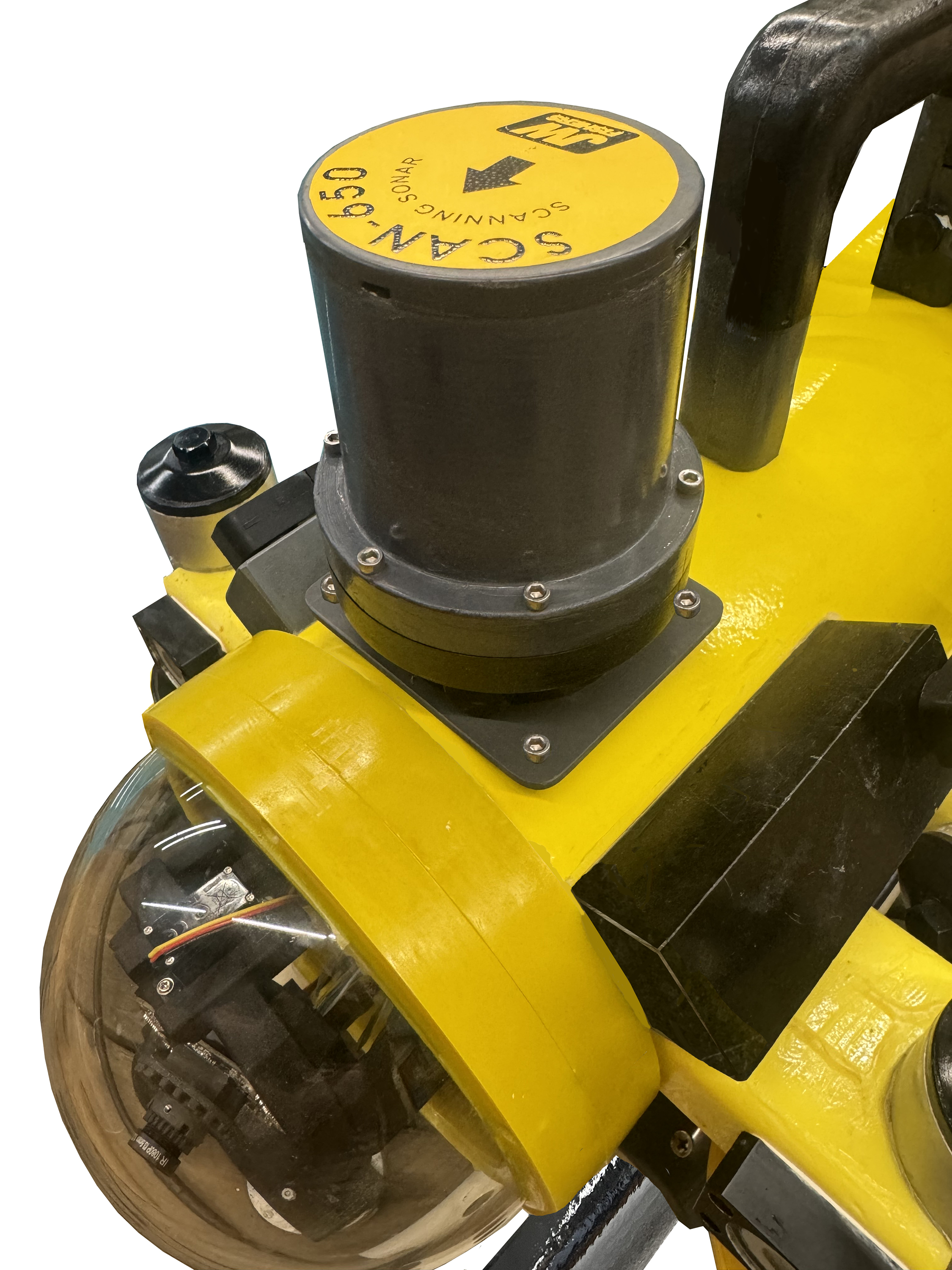
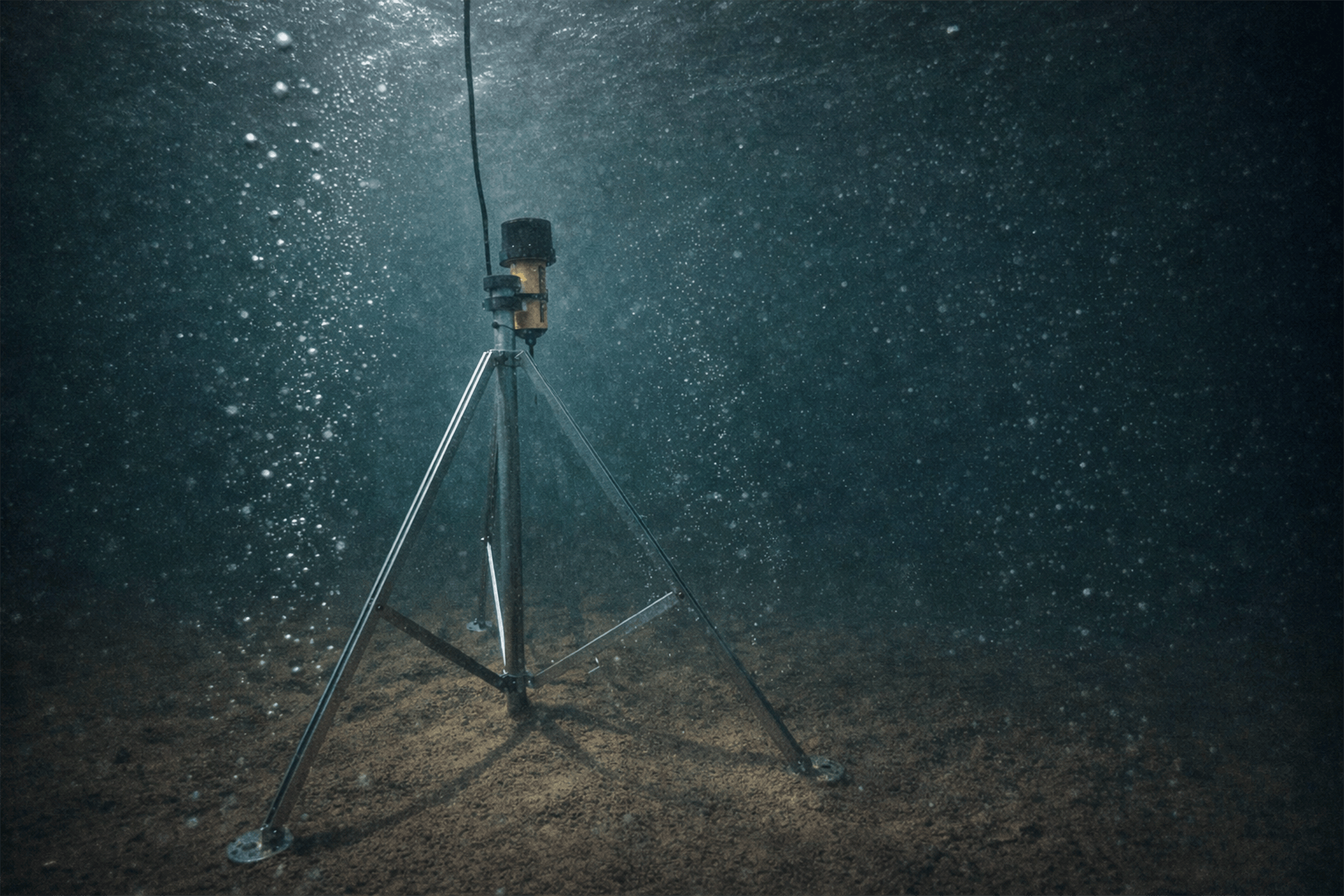
Fishers SCAN-650 is a high-performance sector scanning sonar system mounted on an ROV, pole-mounted from a small boat in shallow water, or installed on a tripod and lowered to the bottom. The scanning sonar serves as an obstacle avoidance system and provides target identification. The sonar beam sweeps in a360-degree circle (or any portion of 360), allowing any object in the sonar "field of view" to be seen and displayed on the computer monitor.
In a typical ROV application, the sonar head or transducer is mounted on top of an ROV. The head scans a circle around the ROV and "sees" targets in all directions, including those well beyond camera range. The sonar images are displayed on the topside computer. Using the sonar for direction bearings, the operator drives the ROV to the various targets for identification and videotaping.
The SCAN-650 uses a unique data transfer technique when transferring data between the scanning head and the upstairs sonar processor, which cuts the time to complete a scan by as much as 50% over other manufacturers' units, and it does it without any data loss. Operating at twice the scan speed is very important when having to search large areas
The scanning sonar system can be ordered with a Microsoft Surface ® tablet, which is mounted inside the control box lid for a “sleeker” package.
An optional GETAC S410 Semi-Rugged Laptop is available for small, open-boat operations. The S410 offers unmatched power and adaptability to professionals in field service, manufacturing, and public safety sectors.
Scanned data files are stored on the PC's hard drive along with the boat's GPS position, time, date, and other pertinent data. The recorded files can be played back at any time. The software allows data to be post-processed, including editing and merging files. Small file sections, including screenshots, can be edited and copied to a small file for emailing. A sizing tool is included in the software, which allows the operator to determine the size of the targets on the screen.
The system package includes the sonar head with "downstairs" electronics, a 150-foot cable to the surface, a surface sonar processor, software, and a USB cable to your computer.
- High Resolution imagery
- Fast scan even on 1/2 degree steps
- 1/2. 1/ 1 1/2, or 2 Degree Steps
- 360 degree continuous sweep or any portion of 360 Degree
- Target sizing
- 256 available colors
Fishers SCAN-650 Sector Scanning Sonar system is covered by a full 2-year warranty.


Recent Reviews

Working with Wonder Studio was a game-changer for our brand. They captured our essence perfectly and delivered designs that exceeded our expectations.

The Wonder team went above and beyond to understand our needs, delivering designs that were not only beautiful but also strategically aligned with our goals.

The creativity and professionalism are unmatched. They took our vague ideas and transformed them into a cohesive and visually stunning brand identity.

More Videos
Customer testimonials


Name Surname
Position, Company name

Name Surname
Position, Company name
Name Surname
Position, Company name
Name Surname
Position, Company name
Explore our range of cutting-edge underwater search equipment
Used around the world since 1968
Similar Products
Discover related items tailored to your interests.


Questions
Find answers to commonly asked questions about our products to help you make informed decisions.